

Tierras Altas, Chiriqui, Panama
ABOUT
Mount Totumas Coffee
This one is not a geisha and that is the point. The trees are Ethiopian landrace material, grown at the top of the Tierras Altas inside a cloud forest reserve, and the cherries are fermented cold before they dry. The cup comes out dark and berried rather than floral, closer to a good Ethiopian natural than to anything else in Panama. We keep coming back to it because nothing else on our shelf tastes like it.
Ethiopian Heirloom
Ethiopian heirloom, sometimes written as mixed heirloom, is not a single named variety at all. It is the term used for the thousands of indigenous landrace types that grow across Ethiopia, the birthplace of Arabica coffee. Many of these plants have never been formally catalogued, and have instead been selected and passed down by farming families over countless generations, each one adapted to the exact hillside and altitude where it grows. This deep genetic diversity is a big part of what makes Ethiopian coffee so distinctive, giving cups that are floral and citric with a delicate tea like quality, bright acidity, and layered fruit that can shift from one village to the next.
Cold fermentation
Fermentation speeds up when it is warm and slows down when it is cold, and almost everything a producer tastes in a ferment comes back to how fast it ran. Holding the tank cold is the simplest way to take control of that. At high altitude the water coming out of the ground is already cold and the nights are colder still, so a producer who wants a long ferment does not need much equipment, only patience and the discipline to stop at the right moment. What comes out is a coffee that has had the time to build sweetness and structure without ever picking up the ferment flavours a warm tank starts throwing off once it gets away.
Brewing recipes
Simple ways to brew with SOLO & SOLO SPIN

SOLO
This is the classic pour-over style.
You control the brew through your pouring technique, water temperature, and flow speed.
Each pour helps guide the extraction, from soaking the coffee evenly at the beginning to building sweetness in the middle and finishing clean at the end.
This method is best when you want a clean, balanced cup with direct control over the pour.
Best for a clean, balanced cup with direct control over the pour.
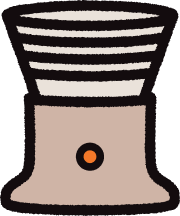
SOLO SPIN
This is a hybrid brewing style.
SOLO SPIN uses a valve to control when the coffee is soaking and when it is draining.
When the valve is closed, the coffee stays in contact with the water, like immersion brewing.When the valve is open, the water flows through the coffee, like percolation brewing.
This method gives you more control over contact time, sweetness, body, and clarity.It is best when you want a consistent, balanced cup with both the roundness of immersion and the clean finish of pour-over.
Best for a consistent, balanced cup — the roundness of immersion with the clean finish of pour-over.
SOLO
SOLO POUR OVER METHOD
A simple, clean, repeatable pour over. Coffee extracts in stages, so each pour has a job.
- First pourHelps water reach all the coffee evenly.
- Middle poursBuild sweetness, body, and balance.
- Final pourKeep it gentle to avoid bitterness, dryness, and heavy flavors.
The goal is not to push extraction harder. It is to keep the cup sweet, clean, and structured.
3 POUR EXTRACTION
Best for a clean, sweet, and balanced cup.
- 0:00Pour 80 g93°CWet all the grounds evenly. No dry spots.
- 0:40Pour 80 g93°CBuilds sweetness and balance.
- 1:20Pour 80 g85°CPour gently and let the brew finish naturally.
4 POUR EXTRACTION
Best when you want more body and structure.
- 0:00Pour 60 g93°CFully soak all the coffee.
- 0:30Pour 60 g93°CHelps build sweetness.
- 1:00Pour 60 g93°CDevelops body and structure.
- 1:30Pour 60 g85°CKeep this pour gentle and centered.
8G DOSE EXTRACTION
For rare, expensive, or limited coffees. A smaller cup, same idea.
- 0:00Pour 40 g93°C
- 0:40Pour 40 g93°C
- 1:20Pour 40 g85°C
- 0:00Pour 30 g93°C
- 0:30Pour 30 g93°C
- 1:00Pour 30 g93°C
- 1:30Pour 30 g85°C
SOLO SPIN
SOLO SPIN BREW METHOD
SOLO SPIN gives you more control, combining immersion and percolation in one brewer.
- Valve closedThe coffee is soaking. Immersion helps water reach the coffee evenly.
- Valve openThe coffee is draining. Percolation keeps the cup clean and clear.
The result is a sweet, balanced, and consistent brew.
TWO PHASE MOISTURE EXTRACTION
Jackie's competition recipe. Simple, consistent, and forgiving. Two identical phases — penetration, then development.
- 0:00Close valve · 100 ml94°CSoak so water reaches every particle.
- 1:00Open valveLet it fully drain.
- 1:20Close valveClose between 1:20–1:25, then start Phase 2.
- 0:00Close valve · 100 ml80°CSoak again. Builds sweetness, texture, and clarity.
- 1:00Open valveLet it fully drain.
- 1:20Close valveClose between 1:20–1:25. Done.
The most forgiving SOLO SPIN recipe — perfect for daily brewing.
PIP EXTRACTION
Percolation · Immersion · Percolation. A clean, sweet, expressive cup.
- 0:00Valve open · 50 ml80°CFirst percolation opens the coffee for aroma and clarity.
- 0:30Close valve · 100 ml94°CImmersion. Builds sweetness, body, and balance.
- 1:00Open valveLet it begin to drain.
- 1:30Add 50 ml80°CFinal percolation. Drain fully for a clean finish.