

Bambito, Tierras Altas, Panama
ABOUT
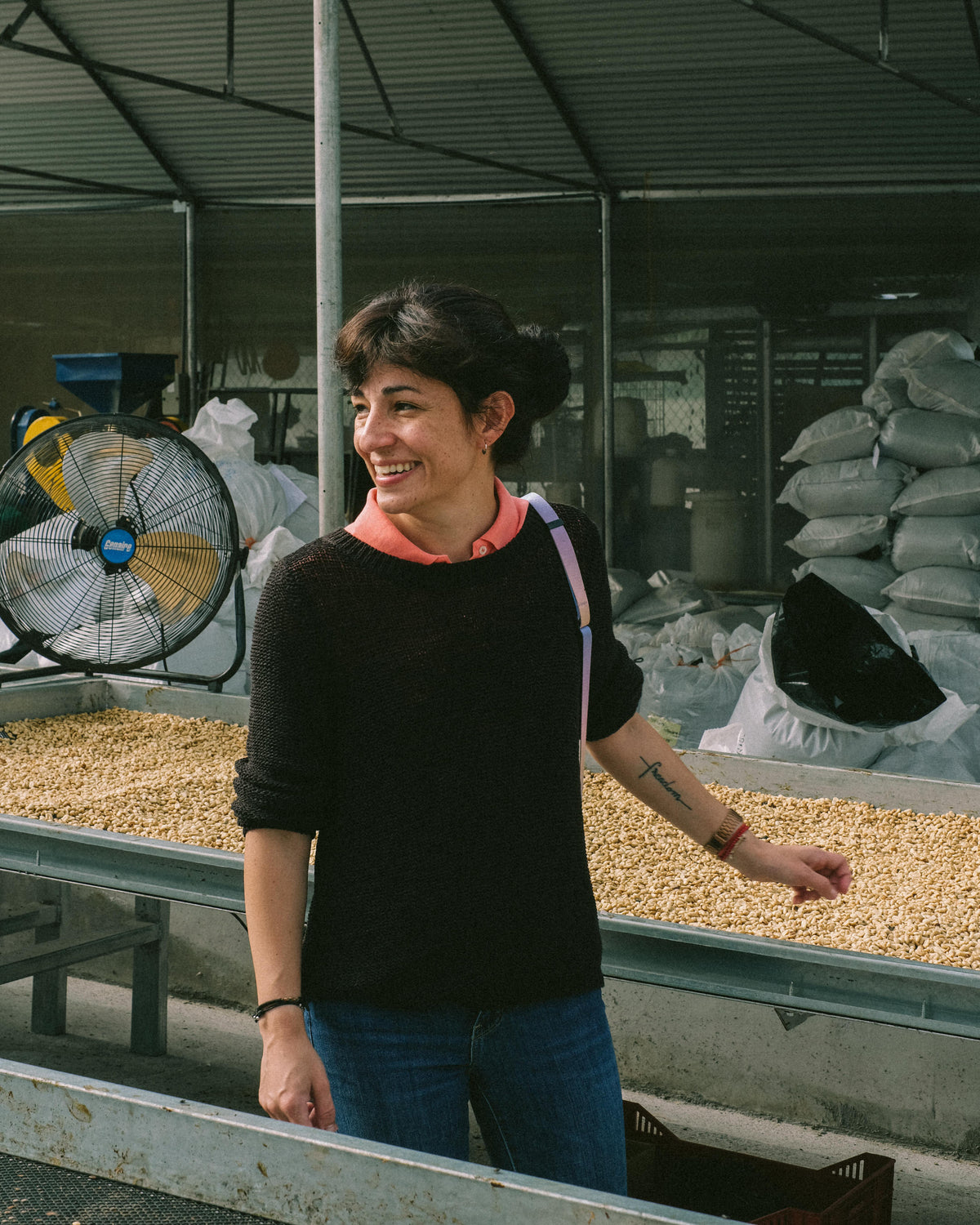
Yaneth de Lucich
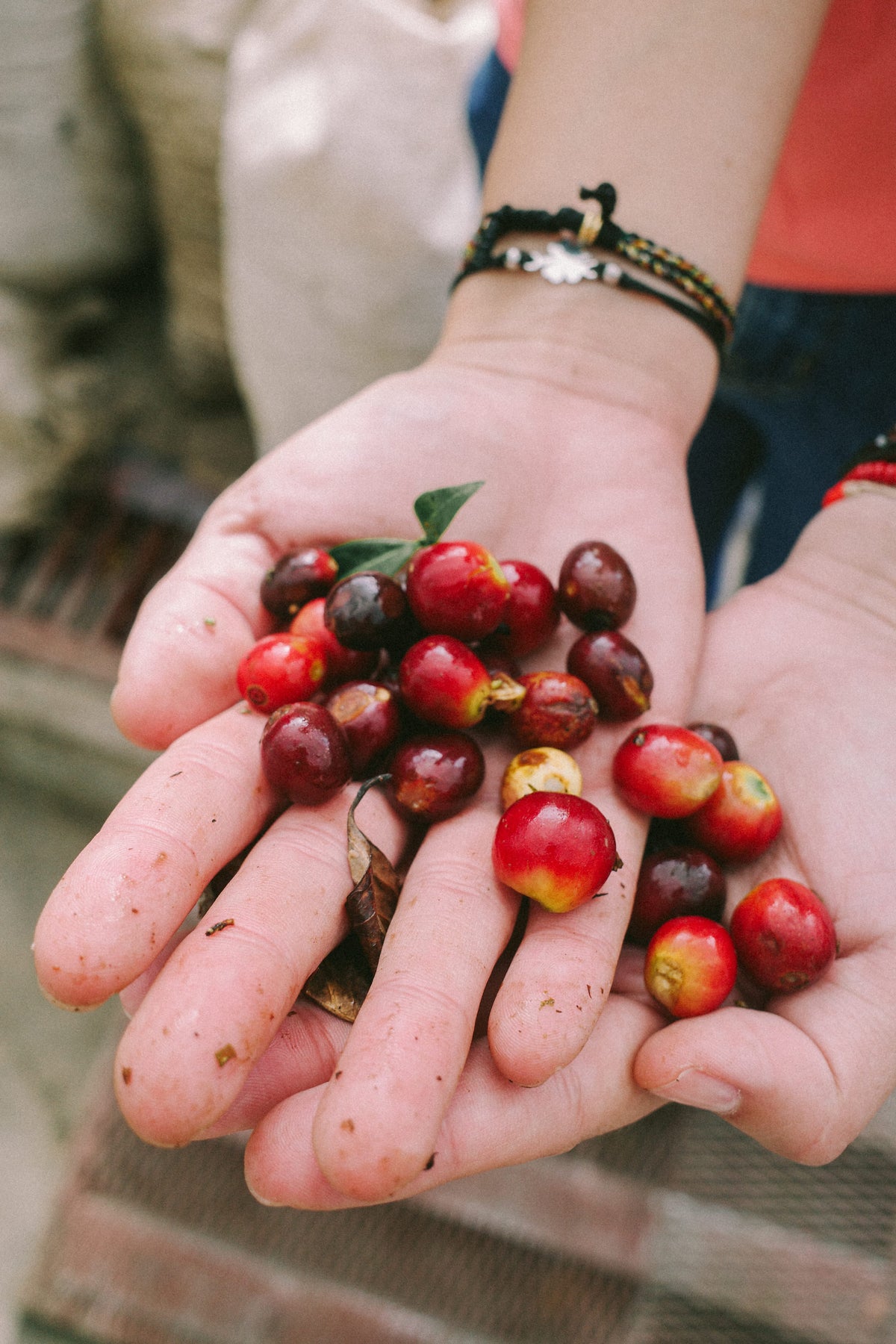
We have bought El Pergamino more than once and it keeps doing the same thing. The cup is quiet at first and then it opens, jasmine and bergamot over a soft stone fruit sweetness. In 2026 the farm placed second in Geisha Washed at Best of Panama with 96.00 points, a quarter of a point behind the winner. Bambito is cold and high and the cherries ripen slowly there, which is most of the answer.
Bourbon
Bourbon · Arabica
Known for sweet, balanced cup potential in good sites.
Honey
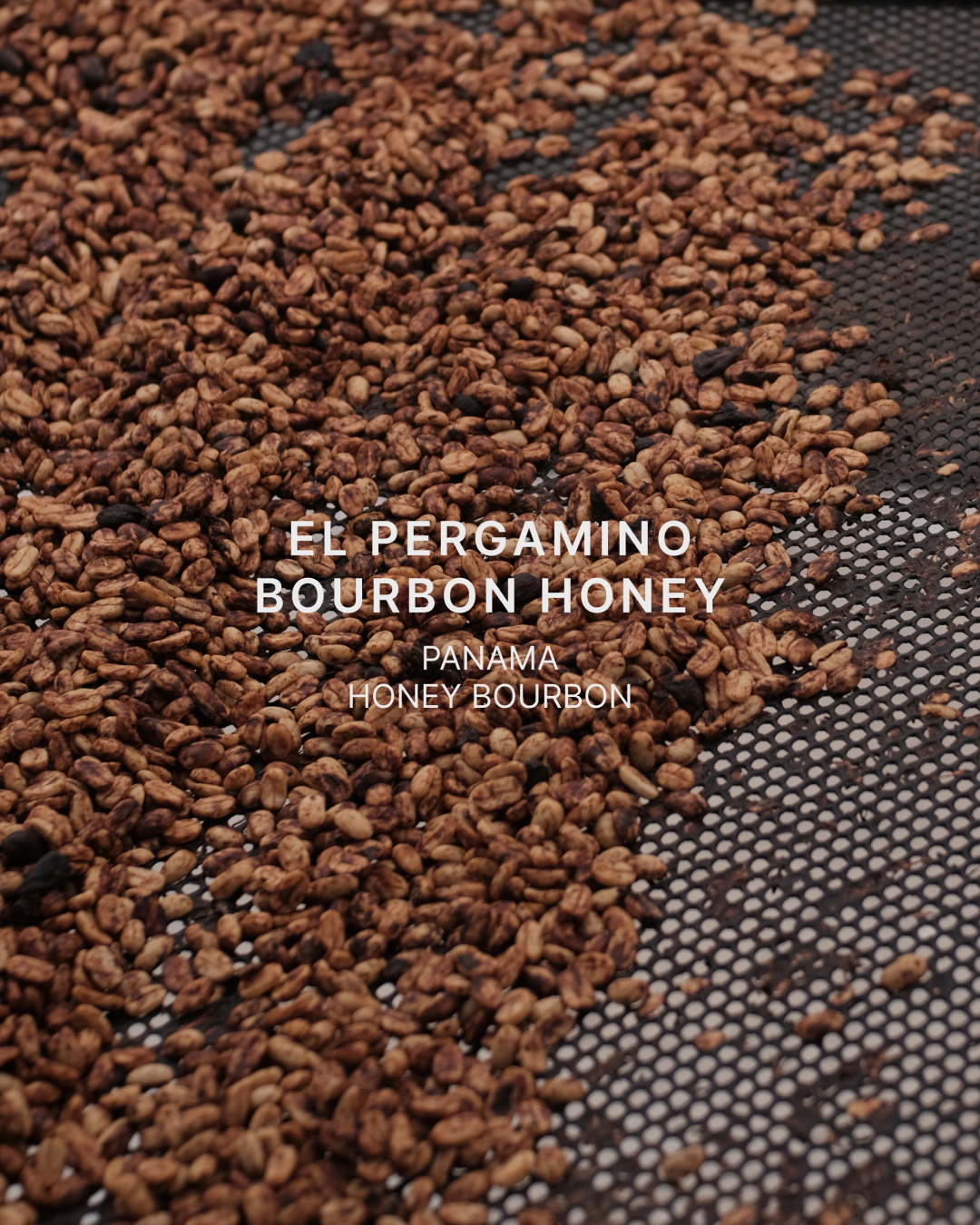
Honey processing sits in the middle ground between washed and natural, and takes its name from the sticky, honey like feel of the coffee as it dries. The skin is pulped off, but some or all of the sweet mucilage is deliberately left clinging to the bean through the drying stage. How much is left on, and how dark the coffee turns as it dries, gives the different styles their names, running from white through yellow and red to black honey, each one a little richer than the last. The result is a cup with round sweetness, soft gentle acidity, and a syrupy, layered body that borrows a little from both of its neighbours.
Brewing recipes
Simple ways to brew with SOLO & SOLO SPIN

SOLO
This is the classic pour-over style.
You control the brew through your pouring technique, water temperature, and flow speed.
Each pour helps guide the extraction, from soaking the coffee evenly at the beginning to building sweetness in the middle and finishing clean at the end.
This method is best when you want a clean, balanced cup with direct control over the pour.
Best for a clean, balanced cup with direct control over the pour.

SOLO SPIN
This is a hybrid brewing style.
SOLO SPIN uses a valve to control when the coffee is soaking and when it is draining.
When the valve is closed, the coffee stays in contact with the water, like immersion brewing.When the valve is open, the water flows through the coffee, like percolation brewing.
This method gives you more control over contact time, sweetness, body, and clarity.It is best when you want a consistent, balanced cup with both the roundness of immersion and the clean finish of pour-over.
Best for a consistent, balanced cup — the roundness of immersion with the clean finish of pour-over.
SOLO
SOLO POUR OVER METHOD
This method is simple, clean, and easy to repeat.
Coffee does not extract all at once. Different flavors come out at different moments during the brew.
The first pour helps water reach all the coffee evenly.
The middle pours build sweetness, body, and balance.
The final pour should be gentle.
This helps avoid bitterness, dryness, and heavy flavors.The goal is not to push extraction harder.
The goal is to keep the cup sweet, clean, and structured.
3 POUR EXTRACTION
This method is best for a clean, sweet, and balanced cup.
At 0:00, pour 80g of water at 93°C.
Make sure all the coffee is fully wet. There should be no dry spots.
At 0:40, pour another 80g of water at 93°C.
This second pour builds sweetness and balance.
At 1:20, pour the final 80g of water at 85°C.
Pour gently and let the brew finish naturally.
4 POUR EXTRACTION
This method is best when you want more body and more structure.
At 0:00, pour 60g of water at 93°C.
Fully soak all the coffee.
At 0:30, pour another 60g of water at 93°C.
This helps build sweetness.
At 1:00, pour another 60g of water at 93°C.
This develops more body and structure.
At 1:30, pour the final 60g of water at 85°C.
Keep this pour gentle and centered.
8G DOSE EXTRACTION
Use this recipe when brewing rare, expensive, or limited coffees.
It is designed for a smaller cup, while keeping the same brewing idea.
Coffee: 8g
Water: 120g
Ratio: 1:15
Grind: Medium-coarse
minerals: 40-80 ppm
For the 3 pour method, pour 40g at 0:00, 40g at 0:40, and 40g at 1:20.
Use 93°C for the first two pours and 85°C for the final pour.
For the 4 pour method, pour 30g at 0:00, 30g at 0:30, 30g at 1:00, and 30g at 1:30.
Use 93°C for the first three pours and 85°C for the final pour.
This small dose method is useful when you want to enjoy a high-end coffee without using too much coffee at once.
SOLO SPIN
SOLO SPIN BREW METHOD
SOLO SPIN gives more control during brewing.
When the valve is closed, the coffee is soaking.
When the valve is open, the coffee is draining.
This lets you combine immersion and percolation in one simple brewer.
Immersion helps water reach the coffee evenly.
Drainage keeps the cup clean and clear.
The result is a sweet, balanced, and consistent brew.
TWO PHASE MOISTURE EXTRACTION
JACKIE'S COMPETITION RECIPE
This recipe was designed to be simple, consistent, and forgiving.
It has two phases.
The first phase is penetration.
This helps water reach every coffee particle evenly.
The second phase is development.
This slows the extraction down and builds sweetness, texture, clarity, and balance.
Coffee: 14g
Water: 200ml
Ratio: 1:14
minerals: 80 ppm
At 0:00, close the valve.
Add 100ml of water at 94°C.
Let the coffee soak.
At 1:00, open the valve and let it fully drain.
At 1:20, close the valve again.
Add 100ml of water at 80°C.
Let the coffee soak again.
At 2:20, open the valve and let it fully drain.
This is the most forgiving SOLO SPIN recipe and is perfect for daily brewing.
PIP EXTRACTION
Percolation. Immersion. Percolation.
Triple Pulse Brewing is a SOLO SPIN recipe.
It starts with percolation, then moves into immersion, and finishes with percolation again.
This creates a cup that is clean, sweet, and expressive.
Coffee: 14g
Water: 200ml
Ratio: 1:14
minerals: 80 ppm
At 0:00, start with the valve open.
Add 50ml of water at 80°C.
Let the water flow through the coffee.
This first percolation stage helps open the coffee and bring out aroma and clarity.
At 0:30, close the valve.
Add 100ml of water at 94°C.
Let the coffee soak.
This immersion stage builds sweetness, body, and balance.
At 1:00, open the valve.
Add the final 50ml of water at 80°C.
Let the brew drain completely.
This final percolation stage refines the cup and keeps the finish clean.
This recipe is best when you want a cup with both sweetness and clarity.
It gives the roundness of immersion, but still keeps the clean finish of percolation.
